
If your eyes feel scratchy, irritated, or tired this winter, you may be dealing with dry eye disease.
What Causes Dry Eyes?
Dry eyes occur when your eyes don’t produce enough tears, or when the tears you make evaporate too quickly. Common causes include aging, hormonal changes, excessive screen time, contact lens wear, surgery, certain medications, and environmental factors like indoor heating. A leading contributor is meibomian gland dysfunction (MGD), where the oil glands in the eyelids don’t work properly, causing tears to evaporate too fast.
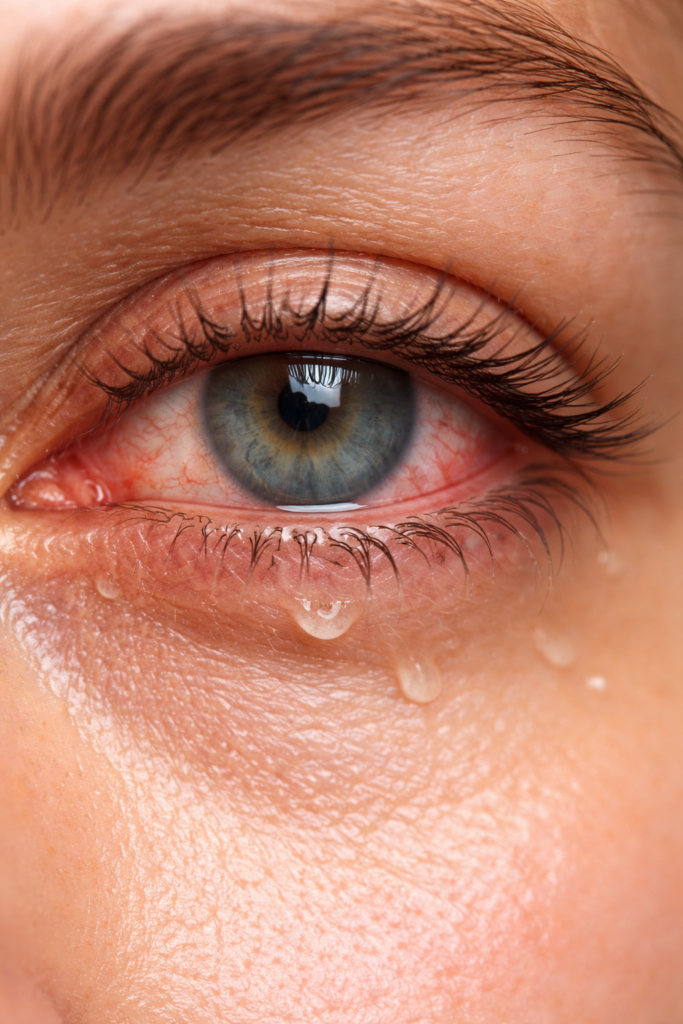
Common Symptoms
Dry eye symptoms can range from mild to disruptive and may include:
- Itching, burning, stinging, or gritty sensations
- Redness or irritation
- Blurry or fluctuating vision
- Watery eyes (a reflex response to dryness)
- Eye fatigue, especially with screen use
Treatment Options
The good news? There are treatment options.
- Artificial Tears: Over-the-counter lubricating drops help supplement natural tears and relieve mild symptoms.
- Prescription Eye Drops: For persistent or more severe cases, prescription medications (such as anti-inflammatory drops or drugs that help increase tear production) can reduce inflammation and improve tear stability.
- Warm Compress Therapy: Applying heat to the eyelids helps unclog oil glands, improving tear quality and comfort.
- OptiLight (IPL Therapy) with meibomian gland expression: This advanced light-based treatment targets inflammation and meibomian gland dysfunction at the source, providing longer-lasting relief for many patients with moderate to severe dry eye.
The Takeaway
If your eyes are feeling “dry” this season, don’t ignore it. Dry eye disease is a chronic condition, but with the right treatment plan, relief is absolutely possible! Call or text 301-485-9533 to set up a dry eye evaluation.